Judge blocks latest Trump effort to restrict birthright citizenship
U.S. President Donald Trump delivers remarks during the 79th annual National Thanksgiving Turkey Presentation on the South Lawn of the White House on Nov. 24, 2026, in Washington, D.C. (Finn Gomez/Getty Images)
A federal judge in Washington, D.C., on Wednesday blocked the Trump administration’s latest effort to restrict birthright citizenship for the children of international workers born in the United States, according to a newly filed ruling.
D.C. District Judge Christopher Cooper, an appointee of former President Barack Obama, granted a request for a preliminary injunction blocking President Donald Trump’s executive order earlier this year that came in the wake of the Supreme Court’s ruling that struck down Trump’s push to formally end birthright citizenship.
Trump aimed to do away with birthright citizenship altogether in an executive order he signed on the first day of his second term last year. In August, he signed another executive order targeting birthright citizenship — one that would outlaw what the administration has described as “birth tourism” and another that would narrow the criteria for who is eligible for birthright citizenship.
The narrower executive order directed federal agencies to not grant citizenship to children born in the U.S. to parents that lacked diplomatic immunity and who worked for foreign governments or other organizations, those born through commercial surrogacy, as well as children with a parent who is a suspected gang member or potential terrorist.
But in his ruling, Cooper said Trump “cannot carve out new exceptions to birthright citizenship for children born within the United States and subject to its laws” and granted the request for an injunction and class-action status from a group that filed suit who claimed their citizenship would be unlawfully denied if the order was implemented.
“The Citizenship Clause promises citizenship to practically all children born in the United States,” Cooper said in the ruling. “Earlier this year, the Supreme Court kept that promise by striking down EO1. This Court does so again today by enjoining EO2’s application as to the certified class.”
Trump has long called for limits to who is eligible for U.S. citizenship at birth and criticized the Supreme Court’s June decision to uphold birthright citizenship. In August, he said his executive order was needed because of the high court’s refusal to greenlight his earlier executive order.
“We had a very unfortunate decision in the Supreme Court concerning birthright. It was close, but a very, very unfortunate decision. So we’re making adjustments because it’s very unfair,” Trump said at the time.
ABC News has reached out to the Justice Department and the White House for comment.
Lindsey Graham rides on the back of a golf cart with his sister Darline Graham Nordone (C) during the Iowa State Fair on August 17, 2015 in Des Moines, Iowa. (Justin Sullivan/Getty Images)
(WASHINGTON) — President Donald Trump said on Monday he wants Lindsey Graham’s sister, Darline Graham Nordone, to be his temporary replacement in the Senate.
South Carolina Gov. Henry McMaster announced around the same time as Trump’s post that he will be making an announcement about who is appointing to the Senate seat at 4 p.m. on Monday
ABC News has reached out to McMaster’s office about Trump’s push for Nordone to be Graham’s replacement. ABC News has already reached out to Nordone for comment.
Trump wrote in a social media post that he made his recommendation to McMaster, and said it would a “fabulous tribute” to Graham.
Separate from the temporary replacement to complete Graham’s term, South Carolina will hold a special election on Aug. 11 to replace Graham as the Republican nominee on the general election ballot this November.
Graham and his sister shared an incredibly close relationship. After their parents died when Graham was only 22 years old, he took on a caretaker role for his younger sister, becoming her legal guardian.
Nordone, in a recent video for Graham’s reelection campaign, said of her brother, “He’s always been there for me, no matter what.”
It is not immediately clear if Nordone has any political experience or aspirations. According to The New York Times, Nordone is a mother of two and has worked to help people with disabilities find jobs.
Graham’s office announced over the weekend that the longtime Republican lawmaker had died suddenly at the age of 71. Preliminary findings from the Medical Examiner of the District of Columbia said the senator died from an “aortic dissection due to arteriosclerotic cardiovascular disease.”
Trump, in an interview with “Fox and Friends” on Monday morning, called Graham a “friend” and praised his work on shepherding through the nomination of Supreme Court Justice Brett Kavanaugh during his first term.
“He had fun with politics, but he was really good at it,” Trump said of Graham. “And then when he got angry, like he did in the case of Brett Kavanaugh, it was so impactful.”
Sen. Lindsey Graham speaks during a press conference at the U.S. Capitol, April 27, 2026, in Washington. (Heather Diehl/Getty Images)
(WASHINGTON) — Lindsey Graham, a longtime Republican senator from South Carolina, who had become one of President Donald Trump’s staunchest political allies, died on Saturday after a “brief and sudden” illness, his office said in a statement. He was 71.
“Senator Graham’s family appreciates prayers at this time and asks for privacy during this incredibly difficult period,” said the statement, which was posted early Sunday on social media.
First elected to the Senate in 2002, Graham had in 23 years risen to be one of the chamber’s most prominent figures. He won reelection three times, most recently in 2020.
“Senator Lindsey Graham, one of the greatest people and Senators I have ever known, is dead!” Trump said on social media on Sunday morning. “He was always working, and was a true American Patriot. Lindsey will be greatly missed!!!”
The flags above the White House, as well as on the White House North Lawn flagpole, have been lowered to half staff following the news of Graham’s death.
Graham was aligned with the president on most matters and the two were seen together frequently on the golf course and at events. He advised the president on matters of foreign policy, including recently on the Iran war. He was outspoken in support of the president’s decision to lead strikes on nuclear sites in Iran last year.
Graham served as the current chair of the Senate Budget Committee, a role he had most recently used to lead the Senate’s efforts to pass a roughly $70 billion budget reconciliation bill to provide funding for border security. That legislation was signed by Trump in June.
He was a also member of the Appropriations, Judiciary and Environment and Public Works committees.
In his time in the Senate, Graham also helmed the powerful Senate Judiciary Committee from 2019 to 2022.
While atop the panel, he led the committee through the swift confirmation of Justice Amy Coney Barrett to the Supreme Court, following the death of Justice Ruth Bader Ginsburg in the final months of Trump’s first term. Graham had earlier been among those who blocked President Barack Obama’s nomination of Merrick Garland, his pick to fill the vacancy left by the death of Justice Antonin Scalia, almost 11 months before the 2016 presidential election.
Graham would have returned to the top GOP position on the committee next Congress.
Before his time in the Senate, Graham had served in the House, where he represented South Carolina’s third district. He was first elected to that office in 1994 and served four terms.
In his more than three decades in Washington, Graham had sparred with several presidents. As a member of the House in 1998, he was appointed a manager of the impeachment proceedings against then-President Bill Clinton. He was a harsh critic of Obama, as well as President Joe Biden, whom he also considered a longtime friend from their years together in the Senate.
Graham was also once numbered among the fiercest critics of Trump, whom he ran against in the 2016 presidential election, a race he withdrew from before the primaries. But their relationship had softened, with Graham saying he had turned into one of his closest friends.
“On a professional level, I am proud to have been there at the beginning when President Trump — through sheer force of will — achieved the greatest political comeback in American history,” Graham said in March 2025. “On a personal level, I genuinely enjoy our friendship. He’s an awesome golfing buddy, who I have yet to beat.”
The president recently endorsed Graham in his primary campaign, in which Graham sailed to victory in June with nearly 57% of the vote, defeating several challengers. He was slated to appear on the ballot this November.
Trump held a tele-rally for Graham ahead of the race, praising their partnership amid the war in Iran, which Graham staunchly defended.
“They cannot have a nuclear weapon,” Trump said at the time. “And Lindsey has been fighting with me all the way. All the way for that. We’ve been a very tough team and I think we are winning that battle.”
He was a member of the Judiciary committee since he first joined the Senate in 2003. His time on the panel was spent working to mold the federal judiciary. While serving on the committee he helped to advance confirmation of conservative judges to the federal bench, and also became a staunch defender of Trump, his close friend and ally.
Graham in recent statements appeared positive that he and Trump would continue in lockstep if Graham was reelected the in fall.
“Let me tell you in ’27, if I win in November, I’ll be chairman of the Judiciary Committee,” he said. “I’ll wake up every morning and go to bed every night, thinking, ‘How many judges can we put on the bench before Trump leaves in ’28.'”
He had been a foreign policy hawk during his time in office, supporting the president in his war with Iran, making visits to Israel and fostering a strong and at-times contentious relationship with Ukrainian President Volodymyr Zelenskyy. He pushed for military aid to the country, including weapons and financial assistance.
Shortly before his death, Graham made his 10th visit to Ukraine — meeting with Zelenskyy and visiting a drone manufacturer in the country. He and a bipartisan group of senators announced on Friday a bipartisan deal with the White House on a Russia-sanctions bill that Graham had long-championed.
“In my opinion, this summer is the time to go all in to put pressure on [Russian President Vladimir] Putin to get to the peace table and end the bloodbath,” he said on July 7.
Zelenskyy said on Sunday that he and Graham met twice in the past week, adding that he was “deeply saddened” by the news, calling the senator a “true defender of freedom,” a “staunch advocate” for Ukraine and a “determined leader.”
Israeli Prime Minister Netanyahu, in a statement posted on Sunday morning, called the senator a “dear friend,” going on to say, “Israel has lost one of its greatest friends. America has lost a great patriot. I have lost a beloved friend.”
Graham was also highly involved, earlier in his career, in efforts to craft a bipartisan deal on immigration. He worked across the aisle in 2013 to negotiate a border security bill that created a pathway to citizenship for some undocumented migrants while increasing border security and changing immigration rules. That legislation never became law.
Lindsey Olin Graham was born on July 9, 1955, in Central, South Carolina, a town in the state’s northwest that, at that time, had little more than 1,000 residents.
His official Senate biography described his family as “blue collar,” saying his parents ran a local restaurant and pool hall. He became the legal guardian to his younger sister and raised her after his parents died.
“The first member of his family to go to college, Graham earned his undergraduate and law degrees from the University of South Carolina,” his bio said.
The year after he earned a law degree in 1981, he joined the U.S. Air Force, where he served as a lawyer. He was assigned overseas in Germany between 1984 and 1988, before leaving active duty the following year.
As a reservist, he was later called to active duty during the first Gulf War, during which he served state-side.
He retired as a reservist in June 2015 at the rank of colonel.
Graham lived in Seneca, South Carolina, and was not married. His official biography says he was a member of Corinth Baptist Church.
He last voted in the Senate on June 24, right before the chamber departed for the Fourth of July recess. The Senate is slated to return on Monday.
Graham had been a longtime friend of Sen. John McCain, a Republican, who died in 2018, and Sen. Joe Lieberman, a Democrat-turned-independent, who died in 2024.
The three “traveled the world together,” Graham said in 2018.
“I’ve seen these guys in action,” Graham said at the time. “I’ve learned a lot from both of them and we had so much fun.”
Majority Leader John Thune said on Sunday that his “heart is heavy” to learn of the death of his friend and colleague.
“As South Carolina’s senior senator, Lindsey fought passionately for the Palmetto State,” Thune said in a post on social media. “He was a trusted adviser and colleague to me and many others, and numerous presidents and heads of state have relied on his counsel. His influence on the federal judiciary, our national defense, and his beloved South Carolina will be felt for generations.”
ABC News’ Shannon Kingston, Nicholas Kerr and Charlotte Gardiner contributed to this report.
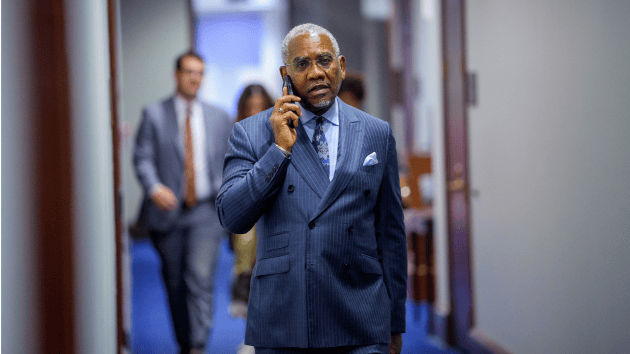
Rep. Gregory Meeks (D-NY) arrives for a Democratic caucus meeting on Capitol Hill on September 1, 2026 in Washington, DC. (Photo by Andrew Harnik/Getty Images)
(WASHINGTON) — Democratic lawmakers are pushing a bill to disapprove of a nuclear cooperation agreement struck between the United States and Saudi Arabia in a bid to strike down the proposal during a three-month period of congressional review.
Democratic Reps. Gregory Meeks, the top Democrat on the House Foreign Affairs Committee, along with Brad Sherman, John Garamendi and Don Beyer introduced a Joint Resolution of Disapproval on Wednesday, shortly before lawmakers left Washington to return home ahead of midterm elections. A vote could come in November, after the midterms.
Without a two-thirds vote, President Donald Trump could veto Meeks’ bill and the nuclear deal would take effect as it is written.
The nuclear deal, known as a 123 agreement, paves the way for American industry to collaborate on tens of billions of dollars of nuclear energy projects in the kingdom in what the administration says is a sign of deepening ties between the U.S. and Saudi Arabia.
The agreement has raised concerns around the proliferation of technologies that could support a Saudi effort to weaponize nuclear energy, security experts and members of Congress have said.
The terms of the agreement break from the so-called “gold standard” for nuclear deals, by which countries allow international inspectors widespread access to facilities that could support nuclear development. Inspectors are also allowed access to undeclared sites — activities that could involve research that would contribute to nuclear energy.
The U.S.-Saudi deal instead includes a narrower agreement that would limit inspections, administered by the International Atomic Energy Agency, to only declared nuclear sites.
The text of the agreement, which has been released publicly by the administration, establishes a joint study between the two countries on the feasibility of an enrichment facility on Saudi Arabian soil. An additional study could open the door to enrichment of uranium of up to 20%.
Kelsey Davenport, the director for nonproliferation policy at the Arms Control Association who has reviewed the text, said that study was described “vaguely” in the signed agreement.
Enrichment to 20% “poses a more significant risk because enriching to that level constitutes the majority of work necessary to enrich to weapons-grade levels, or 90%,” Davenport said. “The United States has repeatedly, and rightly, raised concerns about Iran previously enriching to the 20 percent level.”
Saudi Arabian Crown Prince Mohamed bin Salman, the kingdom’s de facto leader, has in the past said his government would seek a nuclear weapon if Iran managed to acquire one.
In its communication to Congress on Aug. 27, the Trump administration acknowledged the Crown Prince’s “concerning public statements.”
Secretary of State Marco Rubio, defending the deal in July, said that Saudi Arabia could have turned to an American adversary, like China or Russia, had the U.S. not been prepared to sign the nuclear agreement.
“We live in a new era,” he said. “There are competitors that we face, so we’ll have to adjust individual deals to that reality. We’re not the only show in town but we’re the best show in town. But we want to be, we want to make sure that it’s our companies they’re picking.”
In a letter to Rubio and Energy Secretary Chris Wright Wednesday, a group of lawmakers called for the administration to declassify two documents, or “side letters,” which the White House said were part of the deal but could not be released.
The lawmakers, which included Republican Sens. John Kennedy Louisiana and Rand Paul of Kentucky, called for their release, adding they were “aware of no precedent for classifying and withholding the side letters, particularly when the stated purpose is peaceful nuclear cooperation.”
A bill to strike down the Saudi deal, requiring a supermajority in the Republican-controlled Congress, is exceedingly unlikely. But lawmakers could also opt to pass a law that applies certain conditions to the nuclear agreement.