The Henry County Sheriff’s Office is investigating a domestic-related shooting that occurred on Saturday, September 26, 2026, at the Sheetz convenience store located at 6758 Greensboro Road. The investigation indicates that the incident stemmed from an ongoing dispute involving several individuals who were known to one another through current and former relationships. The dispute began earlier in the day following the return of a vehicle and a disagreement concerning personal belongings.
As the day progressed, the disagreement continued through telephone calls and text messages between those involved. The parties later encountered one another at the Sheetz convenience store on Greensboro Road. While at the store, the ongoing dispute escalated into a confrontation, during which a firearm was discharged, and one person was shot.
The victim was transported for medical treatment.
Darryl Bernard Dandridge, 65 years of age, was taken into custody in connection with the investigation and has been charged with possession of a firearm by a violent convicted felon.
The Henry County Sheriff’s Office has consulted with the Henry County Commonwealth’s Attorney’s Office regarding the circumstances of the shooting and any additional criminal charges that may be appropriate. The investigation remains active, and additional charges may be forthcoming.
Investigators have determined that the individuals involved were known to one another and that the shooting was connected to the ongoing dispute. At this time, investigators do not believe this was a random act of violence or that there is an ongoing threat to the public.
Anyone with information regarding this incident is encouraged to contact the Henry County Sheriff’s Office at 276-638-8751 or Crime Stoppers at 276-632-7463. Crime Stoppers offers rewards of up to $2,500 for information that leads to an arrest and conviction. The nature of the information provided and the identity of the person providing the information will remain confidential.
A sign indicates the store accepts SNAP benefits, April 21, 2026, in Miami. (Joe Raedle/Getty Images)
(NEW YORK) — Major changes are coming on Oct. 1 for the tens of millions of Americans who rely on the Supplemental Nutrition Assistance Program (SNAP) for food assistance from the federal government.
In the short term, most families will see a slight bump in their monthly payments to help afford groceries. But in the coming months, households will face stricter eligibility requirements and changes to how the benefits are administered that could ultimately result in far fewer benefits.
An estimated five million Americans — including more than 1 million children — have already lost SNAP assistance over the past year as part of President Donald Trump’s signature tax and spending law, according to the Center on Budget and Policy Priorities.
Short-term boost in benefits
Every year on Oct. 1, the federal government adjusts its monthly SNAP benefits to account for inflation. These cost-of-living adjustments apply across all states.
For a typical single-person household in one of 48 states (not including Alaska or Hawaii), checks will go from a maximum of $298 to $306 per month. That’s an extra $8 monthly.
For a family of four, checks will go from $994 to $1,023 per month. That’s an extra $29 per month, or $348 per year.
These inflation adjustments are intended to help families keep up with the rising cost of food. Grocery prices are up 2.2% in the past year.
Big funding changes
While these adjustments will help alleviate some cost pressures for current SNAP recipients, a major overhaul to the program is resulting in fewer people receiving benefits.
As part of the “One Big Beautiful Bill Act,” states are required to pay for a larger share of SNAP administrative costs while the federal government pays less. Now, states will be required to cover 75% of those administrative costs — a 25% increase. This change takes effect Oct. 1 and will leave states with millions of dollars of additional costs to cover.
Additional cost shifts are also looming for states. Starting in 2027, states with a SNAP recipient error rate above 6% would also be on the hook for funding a portion of SNAP benefits themselves — expected to cost states hundreds of millions of dollars extra per year.
In anticipation of these sweeping changes, some states are already seeing a big drop in SNAP enrollment.
According to an analysis from the Center on Budget and Policy Priorities, Arizona, Florida and Louisiana were some of the states that saw the biggest change in participation, with Arizona seeing its numbers cut nearly in half.
Changing eligibility requirements
The Republican-backed law has already imposed stricter requirements on SNAP recipients.
Under the law, work requirements apply to able-bodied adults without dependents aged 18 to 64, up from the previous age limit of 54.
The law also changed work requirements for families responsible for a dependent. Now, families with children age 14 and older are no longer eligible for an exemption from those work requirements.
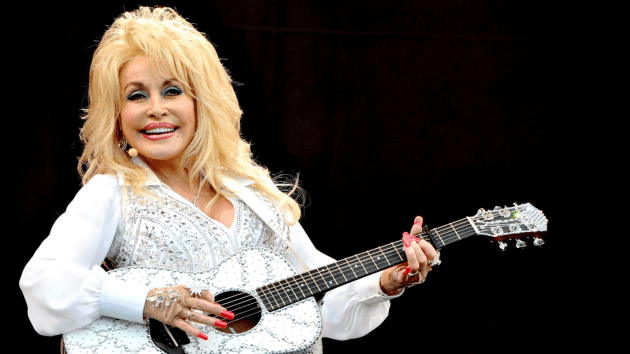
Dolly Parton performs on The Pyramid Stage during day 3 of Glastonbury Festival at Worthy Farm on June 29, 2014, in Glastonbury, England. (Shirlaine Forrest/WireImage via Getty Images)
Dolly Parton, the country music superstar known as much for her philanthropy and theme park business as she was for her chart-topping hit songs, has died at 80.
The news was announced Tuesday in a message from Parton’s nephew, Bryan Seaver, on behalf of her family. No cause of death was provided.
Parton confirmed she was dealing with health issues in September 2025, writing on Instagram, “As many of you know, I have been dealing with some health challenges, and my doctors tell me that I must have a few procedures.” Nearly six months later, at the seasonal opening of her Dollywood theme park, she said that she was still dealing with “a few little health issues” from which she was taking time to recover.
Parton, who’d turned 80 the previous January, also shared that she was still navigating her grief over the March 2025 death of her husband of nearly 60 years, Carl Dean, saying that she had been taking time since to rebuild herself “spiritually, emotionally and physically.”
In a music career that began when she was still a child, born into poverty in the tiny mountain community of Pittman Center, Tennessee, Parton went on to become one of the world’s most successful and beloved entertainers, regarded as a country music living legend. Her trademark style — big blond hair, flamboyant clothes and makeup — was cultivated early in her career, while she was still in her teens.
“I take my negatives and try to make them into positives, and I always feel better being more flamboyant,” Parton wrote in her 2023 book Behind the Seams: My Life in Rhinestones. “Maybe I looked cheap, but I knew I wasn’t cheap.”
Parton’s style helped her get noticed but her talent made her unforgettable. She wrote and recorded many of country and pop’s most enduring songs, including the hits “Jolene,” “Coat of Many Colors” — added to the Library of Congress National Recording Registry in 2011 — “Here You Come Again,” “Love Is Like a Butterfly,” “9 to 5” and more.
Parton’s biggest hit, however, was inarguably “I Will Always Love You,” which topped the charts three times, most notably when Whitney Houston’s 1992 cover became a global smash. Houston’s performance remains the bestselling song by a female artist of all time.
In 2014, the Record Industry Association of America recognized Parton for sales of over 100 million units worldwide, including 19 RIAA-certified Gold, Platinum and multi-Platinum albums out of the more than 100 studio, live and compilation albums she released during her more than six-decade recording career.
Parton was also an actress, making her big-screen debut in the 1980 hit comedy 9 to 5, opposite Jane Fonda and Lily Tomlin — Parton also wrote and performed the film’s chart-topping, Grammy-winning theme song. Not including cameos as herself, she appeared in some nine films in all, among them the enduring 1989 comedy-drama Steel Magnolias.
A savvy businesswoman, Forbes magazine in June 2025 estimated Parton’s net financial worth at $450 million, placing her #78 on their list of America’s wealthiest self-made women. In addition to her extensive publishing catalog — Parton was careful to retain ownership of the songs she wrote, the recordings of which number over 1,000 — the bulk of her wealth came from her Dollywood theme park and other entertainment and hospitality holdings under her Dollywood Company.
Parton was also generous with her money. Through her nonprofit Dollywood Foundation, “Saint Dolly,” as her fans dubbed her, supported education by providing scholarships and financial assistance to people in need. Her Imagination Library, launched in 1995, has provided nearly 308 million books for free to children in the U.S., the U.K., Ireland, Canada and Australia, according to its official website.
When wildfires in 2016 ravaged the Great Smoky Mountains in Eastern Tennessee, where she grew up, Parton created a fund that gave $1,000 a month for six months to some 900 families affected by the fires to help them get back on their feet, and also organized a telethon to raise money for the fires’ victims. Four years later, Parton donated $1 million to Tennessee’s Vanderbilt University Medical Center to help fund the search for a COVID-19 vaccine, and later urged Americans to get vaccinated against the virus in a video that showed her receiving the shot as she sang her hit “Jolene,” with the refrain updated to “vaccine.”
Parton was one of only 17 people to be inducted into both the Country Music Hall of Fame and the Rock & Roll Hall of Fame, a rarified list that also includes fellow greats Elvis Presley, Johnny Cash, Willie Nelson and Ray Charles; with Brenda Lee, Parton was one of only two female artists so honored. She was one of fewer still artists inducted into the Country, Rock & Roll and Songwriters Halls of Fame.
In 2004, the Library of Congress honored Parton with its Living Legend Award in recognition to her contributions to American culture. The following year, she received the National Medal of Arts, the U.S. government’s highest honor for an artist, as well as the Kennedy Center Honors in 2006.
Parton received a Lifetime Achievement Grammy in 2011, in addition to her 10 Grammy wins out of more than 50 nominations. Additionally, her songs “Jolene” and “I Will Always Love You” were inducted into the Grammy Hall of Fame. In 2024, Billboardmagazine placed Parton in the #1 spot on its list of the “100 Greatest Country Artists of All Time.”